Implant Dentures
Implant-Retained Dentures Versus Conventional Dentures
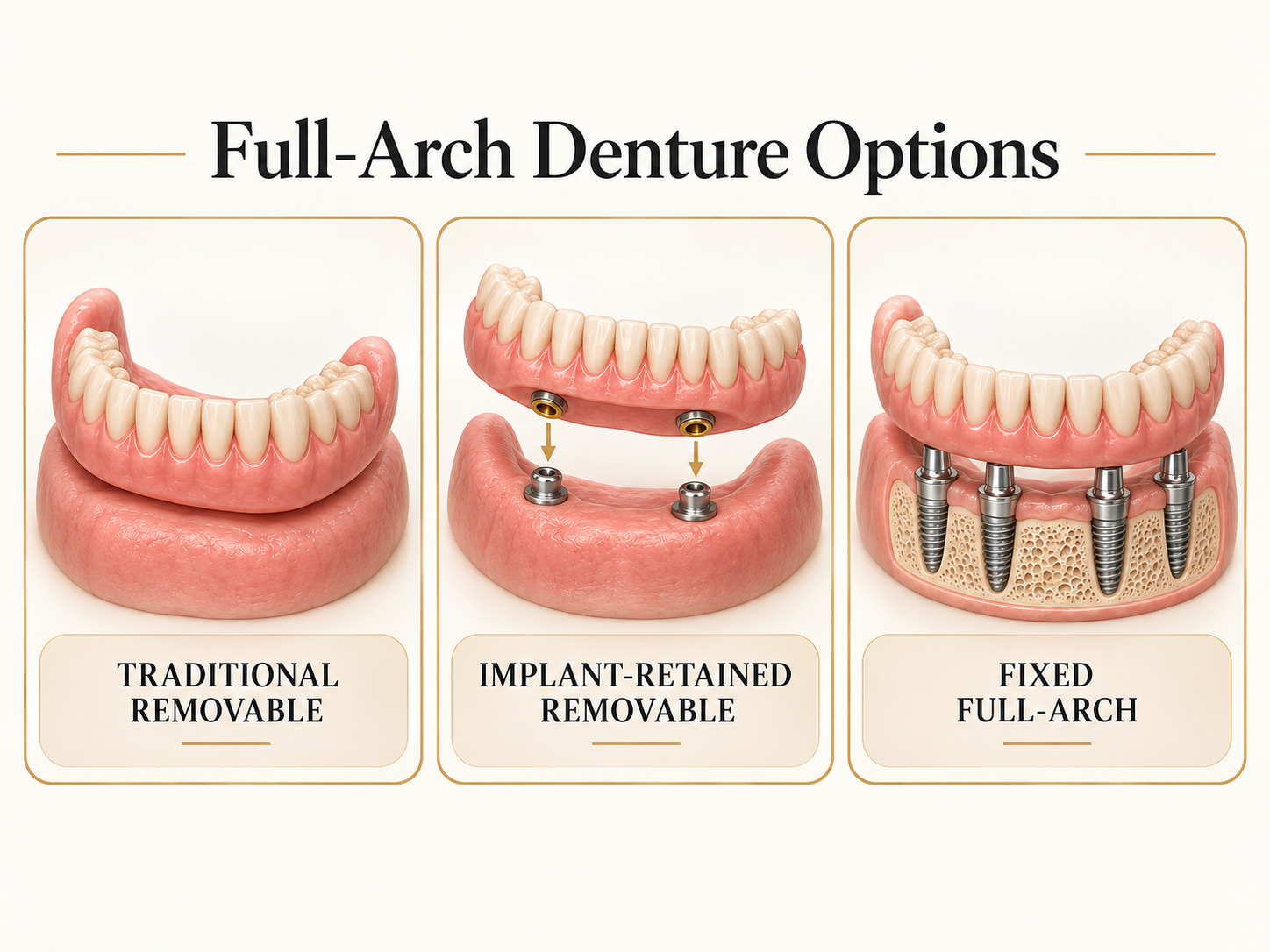
A conventional denture rests on the gums and stays in place by suction and fit; an implant-retained denture attaches to dental implants placed in the jawbone, so it resists slipping and lifting far better. For lower dentures especially, implant retention is often the single biggest improvement in stability and confidence.
How each option stays in place
A conventional denture relies on the shape of your gums and a good impression for its fit. Upper conventional dentures usually get reliable suction across the palate; lower conventional dentures have a small ridge, a moving tongue and cheek muscles, and far less to hold onto.
An implant-retained denture connects to implants through small attachments. The implants act as anchors in the bone, so the denture stays put during eating and speaking yet still removes for cleaning. The denture is removable by you — it is not a fixed bridge.
Where implant retention makes the biggest difference
The lower arch is where most denture wearers struggle. A loose lower denture that moves when you eat or speak is a common frustration, and it is exactly the problem implant retention solves most effectively — often with as few as two implants.
Upper implant-retained dentures are also an option, though many people find a well-made upper conventional denture already quite stable. We help you weigh where the benefit is greatest for your situation.
Trade-offs to understand
Implant-retained dentures cost more and take longer because implant surgery and healing are involved. Implant placement is performed by a dentist or oral surgeon — Nova designs and fabricates the denture and coordinates your care with the surgical provider. Not everyone is a candidate; bone and health factors are assessed by the surgical team.
The attachments also wear over time and need periodic replacement, which is a quick maintenance visit. Conventional dentures avoid surgery and the higher upfront cost, but they need adhesive for many wearers and relines as the gums change.
Who does what in implant treatment
The dentist or oral surgeon places the implants. Nova plans the denture, designs the tooth position and bite, fabricates the denture, and maintains the attachments long term. Each professional works within their own scope, and we coordinate the whole plan with you.
Common Patient Questions
Does Nova place the implants?
No. Implant placement is surgery performed by a dentist or oral surgeon. Nova designs and fabricates the denture that attaches to the implants and coordinates your care with the surgical provider.
Will the implant denture still come out?
Yes — implant-retained dentures are designed to be removed by you for cleaning, while staying securely in place during daily wear.
How many implants are needed?
Many lower implant-retained dentures use two or more implants; upper solutions often need more. The right number depends on your bone and treatment plan, assessed by the surgical provider.
Related Nova Service
Implant-Retained Dentures
Learn more about this treatment, including the process, aftercare and coverage, on the dedicated service page.
Visit the Implant-Retained Dentures pageRelated Articles
This article is general information only and does not replace an individual examination, diagnosis or treatment plan. Your situation is unique — please book a consultation so we can assess your mouth and advise you in person.
Have a Question About Your Dentures?
Book a complimentary consultation in Kingston and we will review your situation in person and explain your options clearly.