Denture Care
Anti-Snoring Devices and When Sleep Apnea Comes First
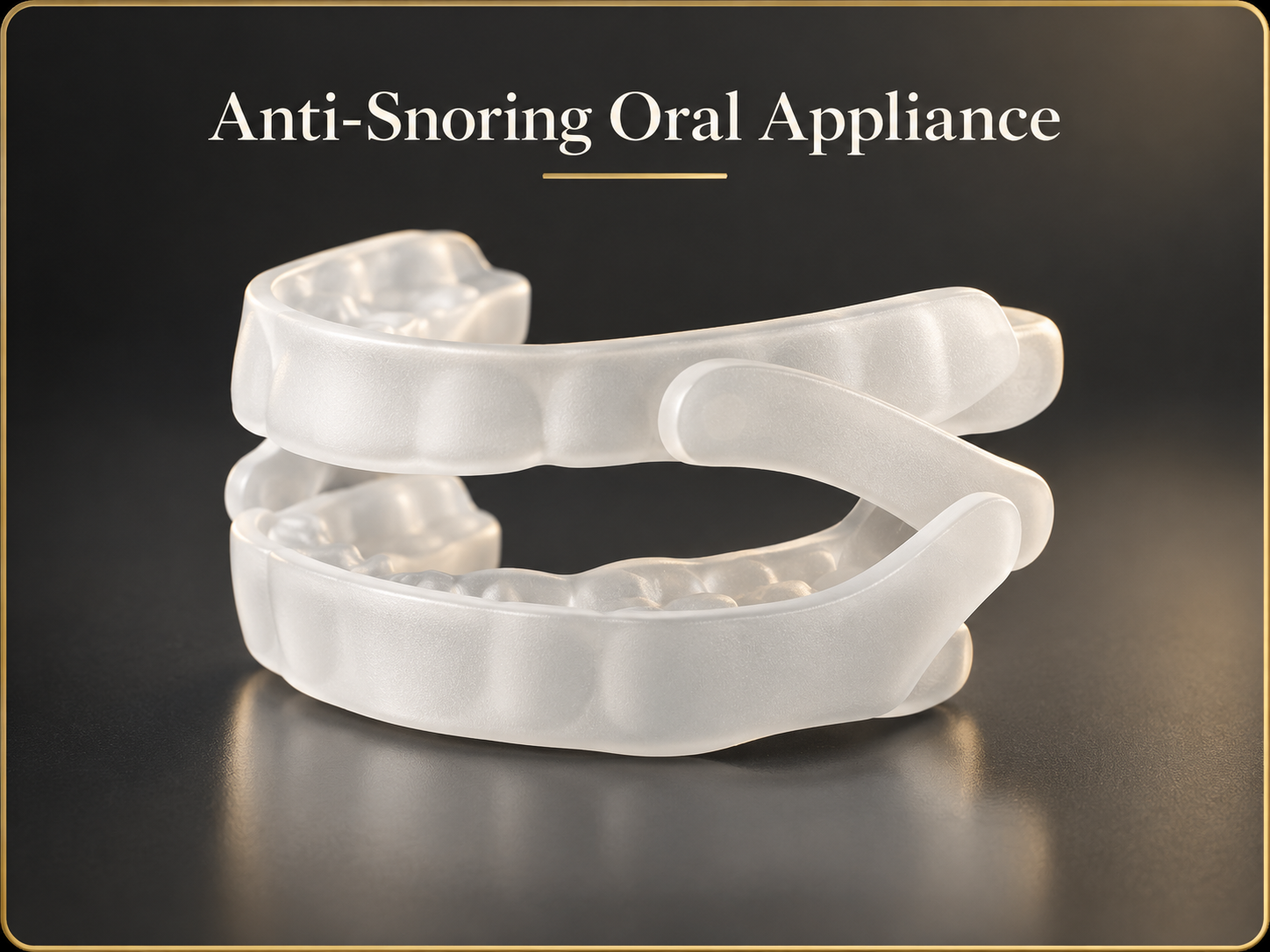
A custom anti-snoring device gently holds the lower jaw forward during sleep to help keep the airway open and reduce snoring for suitable patients. But loud, habitual snoring can be a sign of obstructive sleep apnea — a medical condition that requires diagnosis by a physician — so a medical assessment sometimes comes before an appliance.
How an anti-snoring device works
The appliance is worn during sleep and positions the lower jaw slightly forward, which helps keep the airway more open and reduces the vibration of soft tissues that causes snoring. It is custom-made from impressions of your teeth for a secure, comfortable fit.
Adjustable designs allow the jaw position to be fine-tuned, and the appliance is small, quiet and travel-friendly compared with other options.
When sleep apnea must be ruled out first
Loud, habitual snoring can be a sign of obstructive sleep apnea, a medical condition in which breathing repeatedly stops and restarts during sleep. Sleep apnea is diagnosed by a physician, often with a sleep study, and an anti-snoring device is not presented here as a treatment for it.
If your symptoms suggest apnea — pauses in breathing, gasping or choking at night, daytime sleepiness — we encourage a medical assessment first. Any appliance therapy for apnea belongs in a physician-directed care pathway.
Who an appliance suits and what to expect
An anti-snoring device may be worth discussing if you snore regularly, have been assessed by a physician and simple snoring has been confirmed, and have enough healthy teeth or a suitable denture situation to support an appliance. Effectiveness varies by person, and not every snorer responds.
Some people experience temporary jaw or tooth awareness during adaptation. We review comfort and effect at follow-up, and if your bed partner notices pauses in breathing, gasping or choking, see a physician promptly.
Common Patient Questions
Will an anti-snoring device cure my snoring?
No device can promise that. Custom appliances reduce snoring for many suitable patients, but results vary. We give you an honest assessment at your consultation.
Is snoring the same as sleep apnea?
No — but they can be related. Sleep apnea is a medical condition diagnosed by a physician, often with a sleep study. If apnea is suspected, medical assessment comes first.
Can I get an appliance if I wear dentures?
It depends on your situation. Some designs work with dentures or implants; others need natural teeth for support. We assess this at your consultation.
Related Nova Service
Anti-Snoring Devices
Learn more about this treatment, including the process, aftercare and coverage, on the dedicated service page.
Visit the Anti-Snoring Devices pageRelated Articles
This article is general information only and does not replace an individual examination, diagnosis or treatment plan. Your situation is unique — please book a consultation so we can assess your mouth and advise you in person.
Have a Question About Your Dentures?
Book a complimentary consultation in Kingston and we will review your situation in person and explain your options clearly.