
Repairs & Maintenance
When Does a Denture Need a Reline?
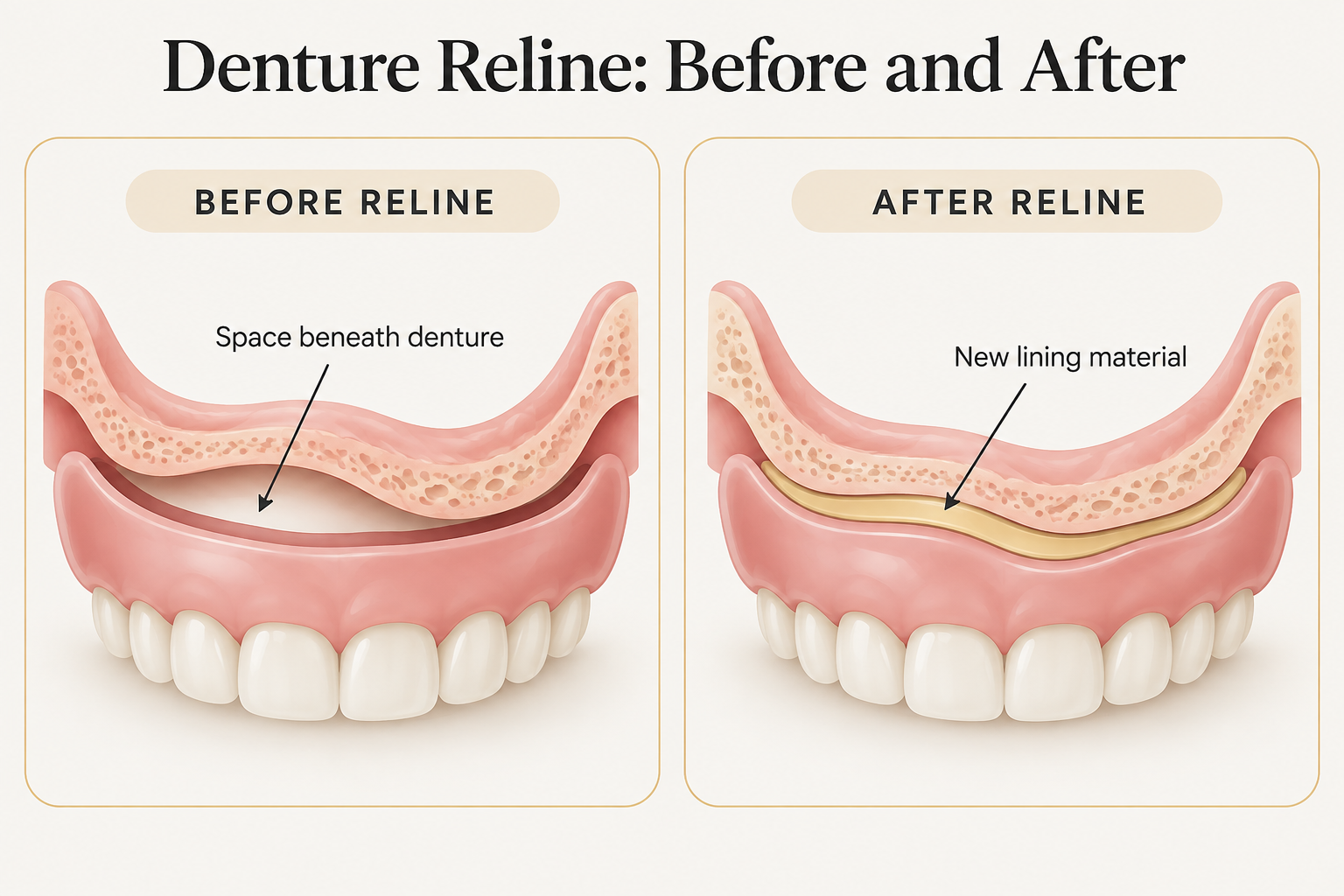
A denture usually needs a reline when it starts to feel loose, rocks or lifts when you eat or speak, or you find yourself reaching for adhesive more often. These are signs the gums and bone beneath the denture have changed shape and the fitting surface no longer matches.
Why dentures get loose over time
After teeth are removed, the gums and the bone beneath them slowly remodel and shrink — a process that continues for life, fastest in the first months after extractions. The denture itself does not change, so a once-snug fit gradually develops gaps.
This is not a flaw in the denture; it is normal biology. Even a perfectly made denture will need periodic relining to keep up with the changing tissue underneath it.
Clear signs it is time for a reline
The most common signs are a denture that moves or lifts when you chew or speak, increasing reliance on denture adhesive, food trapping under the plate, and sore spots from a denture that rocks instead of staying put. An immediate denture that has loosened after healing is a classic candidate.
If you are removing your denture more often during the day because it is uncomfortable, or if your speech has changed because the denture slips, book an assessment rather than reaching for more adhesive.
Reline, rebase, or new denture?
A reline adds new material to the fitting surface so it matches your current gums. A rebase replaces the entire pink base while keeping your existing teeth — useful when the base is stained or cracked but the teeth are still good.
A new denture is the right call when the teeth themselves are worn, the bite has changed, or the denture is simply old. A reline cannot fix worn teeth or a poor bite, and we will tell you plainly when a reline would be money spent on a denture that will not serve you well.
How often should a denture be relined?
It varies, but many dentures benefit from a reline every two to three years. Immediate dentures usually need one sooner, once the rapid healing changes settle. Your annual checkup is the right time to assess this.
Common Patient Questions
Will I be without my denture during a reline?
Same-day relines are available in suitable cases, so you typically leave with your denture the same day. Laboratory-processed relines may take longer — we confirm timing when you book.
Can a reline fix a broken denture?
No — a break needs a repair first. If the denture broke because of fit changes, a reline may be recommended alongside the repair to stop it happening again.
Is a reline covered by CDCP?
Relines, rebases and tissue-conditioning services are among the removable prosthodontic services listed under CDCP. Bring your member information and we can confirm your coverage.
Related Nova Service
Denture Relines and Rebases
Learn more about this treatment, including the process, aftercare and coverage, on the dedicated service page.
Visit the Denture Relines and Rebases pageRelated Articles
This article is general information only and does not replace an individual examination, diagnosis or treatment plan. Your situation is unique — please book a consultation so we can assess your mouth and advise you in person.
Have a Question About Your Dentures?
Book a complimentary consultation in Kingston and we will review your situation in person and explain your options clearly.